

Anyone who has spent time outside with a child knows how quickly their curiosity can take over. What was a simple walk down the street can lead to an endless stream of questions about the clouds, ants, or dandelions. For homeschooling families, these moments can be more than just sparks of curiosity; they become teaching opportunities.
Why Nature Encourages Curiosity
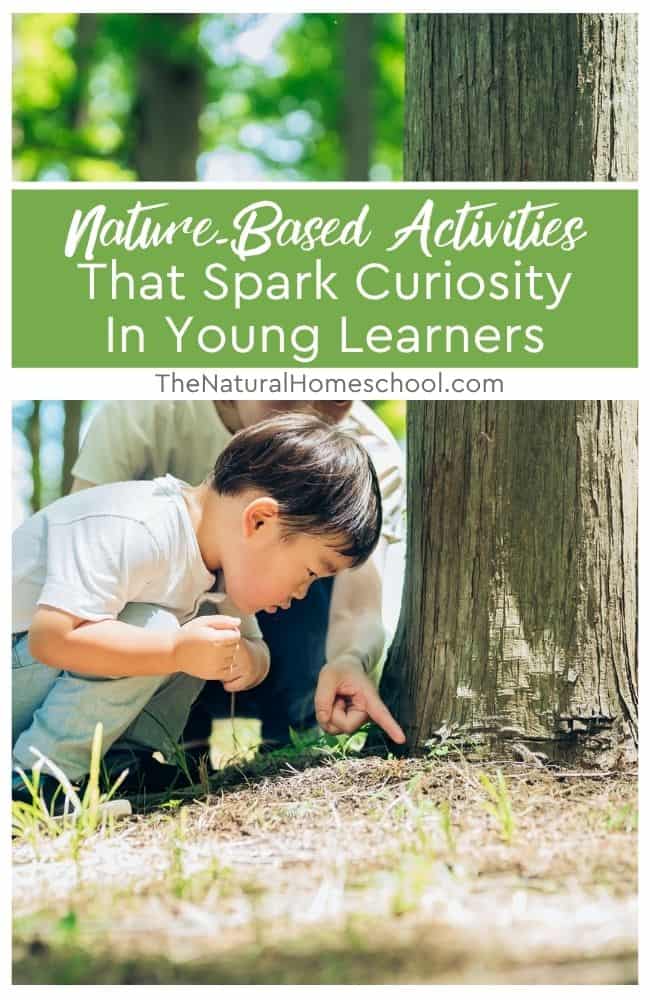
Nature is teeming with activity. From a quick shift in the weather to an animal’s fickle behavior, there’s always something to observe. This unpredictability keeps children alert and interested. They’re more likely to ask questions and further their understanding of the world around them.
The outdoors is also likely to stimulate the senses more than an indoor environment. Children can touch bark, count leaves, or collect feathers to better understand concepts. In turn, these experiences become more memorable and impactful.
Nature Walks That Turn Into Learning Moments
A great way to start with nature-based learning is a simple walk. Take a stroll through the neighborhood or visit a local park. Early mornings could be ideal due to cooler temperatures and active wildlife, but the priority is open-ended outdoor exploration.
Throughout the walk, parents can guide the experience with questions. This might look like the following:
- Why do these leaves look different?
- What do you think this insect is doing?
- Why do you think plants grow here?
- Where does this animal get its food?
Prompts like these can encourage a child to think more critically of their observations without limiting their curiosity.
As children become more adept, add a theme or specific objective to keep them involved. For instance, a “sound walk” would focus on listening for animals, insects, and wind. On another outing, give a specific goal such as spotting three different birds or five yellow-colored items.
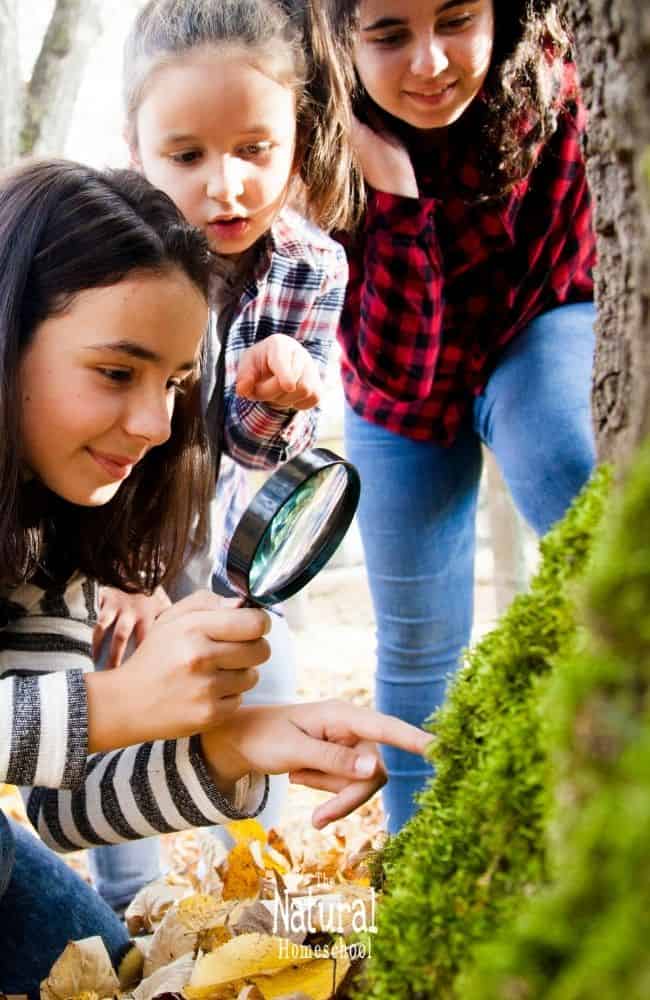
Purchase a journal for children to document their experiences. As they explore, they can record personal findings or sketch their observations. It’s also helpful to provide tools to support their exploration. Items such as a magnifying glass, binoculars, or a collection bag make great additions to a child’s budding explorer kit.
Gardening as Everyday Science
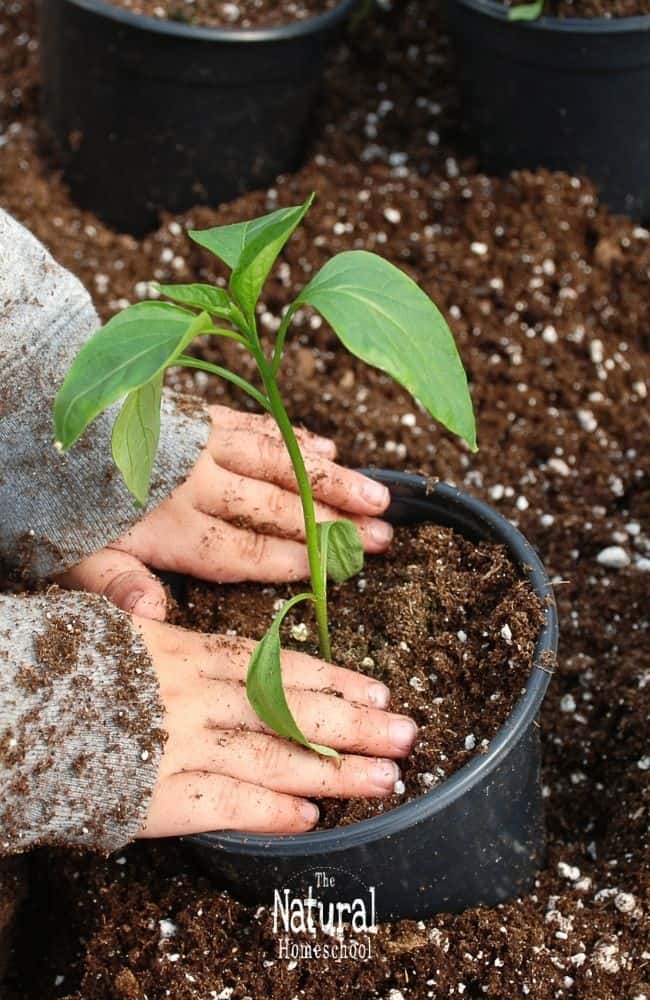
Gardening takes outdoor learning a step further. Incorporating a garden into a child’s homeschooling curriculum can be as easy as planting one in the backyard. However, don’t fret if limited on time or space. Adding potted plants to a windowsill or regularly visiting a community garden can be just as beneficial to a child.
Start with simple tasks when integrating education with gardening. Measuring a plant’s height or counting leaves utilizes math skills. Observing the cause and effect of sunlight and water builds on their knowledge of science. Children can sketch their plant at different stages, exercising their creativity.
Working with plants also teaches practical skills. Children are taught patience as they wait for seeds to sprout and responsibility as they tend to their plants. If consistent, they’re then rewarded with a successful bloom. Over time, these lessons became a foundation for positive morale.
Adding Nature Into Homeschool Routines
Incorporating more nature-based activities into a child’s homeschool curriculum doesn’t hesitate a complete overhaul. You can still have impactful lessons with small adjustments. What’s most important is consistency.
Start by setting time aside for the outdoors. Encourage children to read outdoors or conduct exciting science experiments on the porch. If the weather isn’t cooperating, don’t be discouraged. Children can still learn by other means. They can make weather observations through the window or create compost for indoor plants as an alternative to going outside.
Structure isn’t always necessary when involving nature-based activities. Sometimes children learn the most by testing ideas, solving problems, and using their imagination. Homeschoolers can adopt this methodology by offering an hour of unstructured outdoor play.
Early learning programs often blend guidance with exploration. At home or in a toddler daycare, nature can serve as an educational tool that provides opportunities for building skills and confidence. With simple, nature-based activities, children can create meaningful connections between curiosity and the real world.
You might also like:
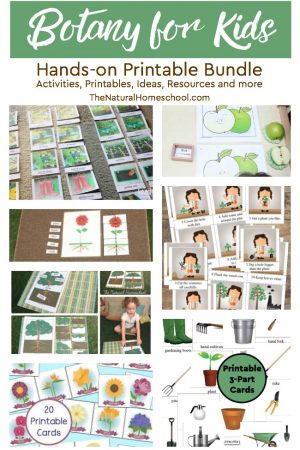
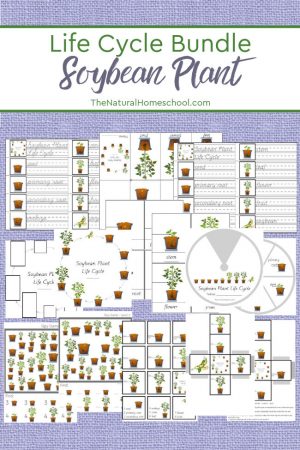
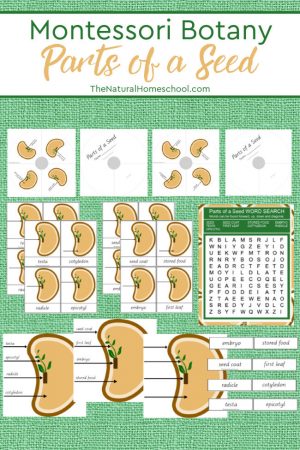
- Nature Ideas for Kids: Herb Garden Play
- Benefits of involving children in outdoor tasks
- Super Creative Nature Walk Ideas & Inspiration
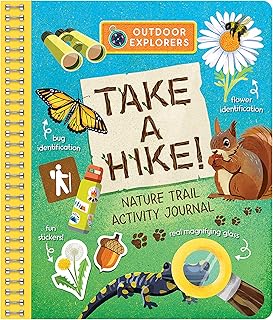
National Geographic Bug Catcher Kit for Kids – Kids Bug Habitat with Magnified Viewer, Bug Outdoor Explorers: Take A Hike Field Journal Activity Nature Book with Stickers for Adventurous Kids,SMILESSKIDDO Kids Explorer Kit, 27 Pcs Outdoor Explorer Kit & Bug Catching Kits – Kid




Latest Posts
- Fall Words for Kids – 24 Printable 3-Part Cards
 We are so excited about Fall. Seriously, every year is awesome. We enjoy the changing leaves, the crisp air, the holidays and the delicious desserts and drinks. So, to celebrate Fall, we have a wonderful set called: Fall Words for Kids. Yes! Yay, Fall! Don’t you just love some great…
 - Fall Montessori Printables for Kids
 Fall is around the corner and you need to be ready with some really awesome activities that are Montessori printables for kids! It’s our favorite season and you can make it extra special with these 10 Fall Montessori printables for kids! They are Montessori-inspired, but can be used for all…
 - Erosion vs Weathering ~ Awesome Science STEM Activities
 Weathering vs Erosion STEM activity is a super easy and fun Science experiment that will teach your kids how the earth works.
 - Simple Music Paper Crafts for Preschoolers (Free Printable)
 Do you teach Music in your homeschool? Have you ever thought of making Music-related crafts that are fun and affordable? Making Music-related crafts can spark so much creativity and go for several Fine Arts areas all at once! Take a look at what we’ve made! Stars, pinwheels, tambourines, flowers… we’ve…
 - Best ABA Practice Management Platforms for Small and Growing Practices
 Running an ABA therapy practice without the right software is like trying to bill Medicaid by hand while also tracking 30 behavior programs across 10 clients. ABA practice management platforms exist to prevent that kind of chaos, and yet picking the wrong one still trips up plenty of clinic owners.…

Leave a Reply